🚨 The Short-Let Security Blind Spot: How Anonymous Bookings Nearly Cost Estates Everything
Last week, a disturbing pattern came to light.
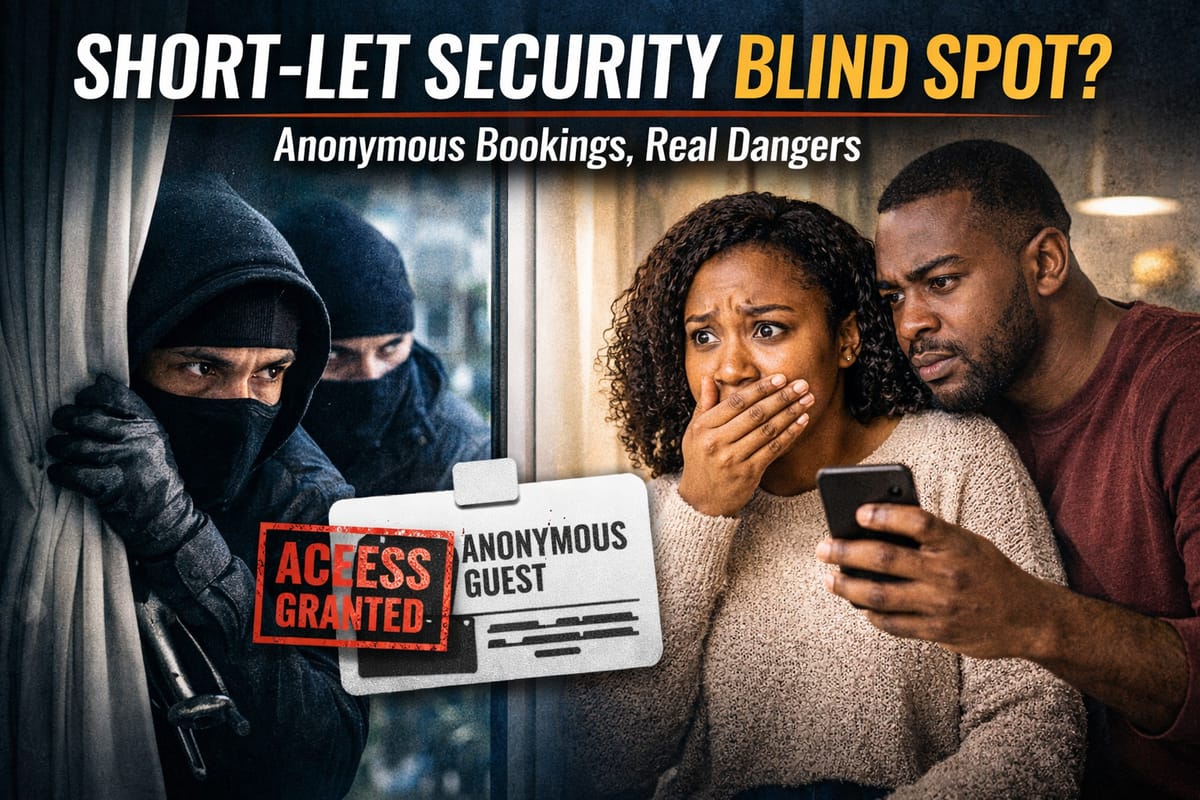
The gang that had been terrorizing Park View, Banana Island, and Shoreline Estate didn’t scale fences or force gates.
They booked short-lets.
They entered legally. They blended in. They jogged. They walked the streets. They studied routines.
Then they struck.
This wasn’t random crime. It was strategic access.
And the real vulnerability wasn’t security guards or perimeter walls. It was anonymity.
🔍 The Short-Let Security Gap Nobody Talks About
Short-lets have transformed real estate in Nigeria. They generate income, attract travelers, and empower hosts.
But without verified identity, they also create invisible risk.
When guests can book without proper traceability:
- Estates lose visibility
- Hosts unknowingly enable access
- Criminals exploit hospitality as a disguise
Security isn’t just about gates anymore. It’s about data.
🔒 The Era of Anonymous Bookings Is Over
In 2026, verification is not optional.
This is exactly why we built GidiStay with GTID (GidiStay Trusted ID).
GTID introduces:
- ✔ Verified guest identity before stay
- ✔ Digital traceability
- ✔ Host-level accountability
- ✔ Estate-aligned compliance
- ✔ Reduced anonymity risk
When identity is verified, behavior changes.
Anonymity is a criminal’s greatest advantage. Traceability is their greatest fear.
❓ A Question Every Estate Must Ask
If something happens in your building tomorrow:
Can you confidently identify who accessed your property through short-lets?
If the answer is uncertain, you don’t have a booking system. You have a blind spot.
🔮 The Future of Short-Lets Is Secure
Tourism and hospitality should never compromise safety.
The platforms that will survive — and scale — are the ones that prioritize verification first, not convenience.
This isn’t fear marketing. It’s reality.
And the estates that adapt now will avoid becoming tomorrow’s headline.
📊 The Data Doesn’t Lie: Why Verification Matters
This isn’t speculation. The global short-term rental industry has been under increasing scrutiny for security gaps tied to identity verification.
Here’s what the numbers show:
- According to the United Nations Office on Drugs and Crime (UNODC), urban residential crime patterns increasingly involve “legitimate access” methods — meaning offenders enter properties through lawful or disguised channels rather than forced entry.
- A 2023 global trust and safety review by Airbnb reported millions of bookings removed or prevented due to suspicious activity — highlighting how common identity-based risk screening has become in mature markets.
- The Nigeria Police Force has repeatedly emphasized that short-term rental misuse has become a growing concern in urban areas, particularly where guest identity verification is weak or absent.
- Security analysts consistently note that anonymity significantly increases the probability of premeditated crimes in gated communities, because offenders can study environments without raising suspicion.
The pattern is clear:
- When booking systems lack verification, criminals exploit access.
- When identity is verified and traceable, risk drops significantly.
The hospitality industry globally is shifting toward stronger ID frameworks — not because it’s trendy, but because it’s necessary.
Anonymity creates opportunity. Verification creates deterrence.
👥 Call to Action
If you are:
- A host — switch to verified bookings only.
- An estate manager — request a GTID security briefing.
- A property investor — choose platforms that protect your asset, not just your occupancy rate.
👉 List on GidiStay with GTID verification.
👉 Protect your property.
👉 Protect your residents.
Because in today’s world, security isn’t optional.
It’s foundational.