💖 Love, Balloons, and Bias: When Tribal Stereotypes Cost Us Real Connection
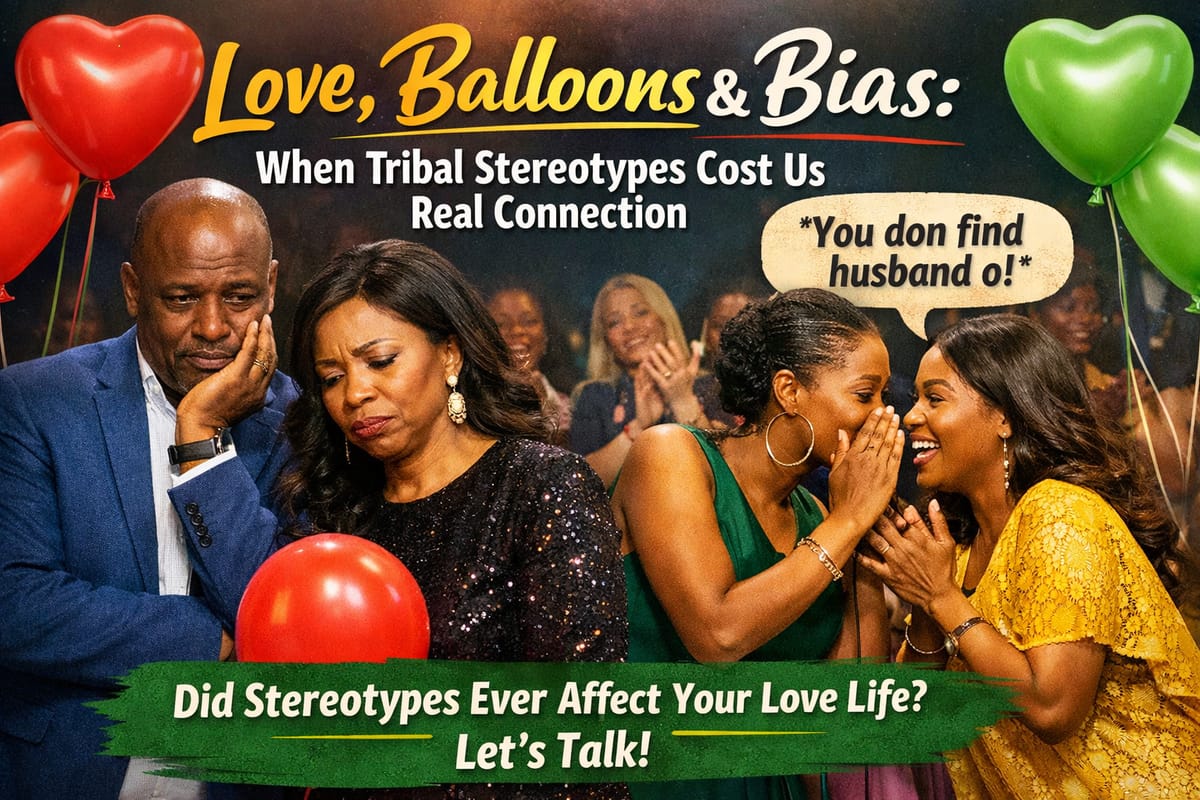
I was watching one of those popular love game shows—the kind where balloons are popped to signal rejection—and this particular edition stood out. It wasn’t the usual youthful crowd. These were mature men and women, over 40, people who had lived, loved, lost, and were brave enough to try again.
There were many impressive contestants—men and women who looked confident, well-spoken, and emotionally grounded. But one man, in particular, caught everyone’s attention.
🌟 The Memorable Contestant
He was 52, well put together, articulate, and had a stable career. He openly shared that he had a child from a previous marriage. The women asked their questions—and they didn’t pop their balloons. That alone said a lot.
When the moment came for him to choose, he popped six balloons and left just one. The audience clapped. Some women murmured softly, “You don find husband.” It felt like a win—not just for her, but for hope.
The woman was 45, composed, confident, and clearly happy to be chosen.
❓ The Final Question
Then came the final question. The host asked if they had anything else they wanted to know about each other. The man asked where she was from.
She smiled and said, “Abeokuta… and Ijebu—but more Ijebu.”
The atmosphere shifted. His face changed. After a pause, he said he had to pop the balloon. Just like that—it was over.
The host, surprised but respectful, asked if he had an issue with Ijebu people. He quickly said no, that it wasn’t personal. And to his credit, he stayed polite. But the damage was done.
Two people who moments earlier looked genuinely compatible—emotionally, intellectually, and in life stage—walked away because of a tribal label. And I couldn’t stop thinking about it.
🧐 When Did We Start Rejecting People Instead of Individuals?
This moment wasn’t really about dating. It was about how deeply stereotypes still live in us, often unconsciously.
Many of us carry stories we’ve heard:
- “Don’t marry from this tribe.”
- “Those people behave like this.”
- “People from that place are difficult.”
But how many of those stories are truly ours? And how many are inherited fears, recycled jokes, or outdated narratives?
Nigeria is home to hundreds of ethnic groups, rich cultures, and beautiful differences. Yet, sometimes, we reduce people to a single word—Ijebu, Igbo, Hausa, Yoruba, Fulani—and forget the human being standing in front of us.
🇳🇬 Does Tribal Bias Make Us Less Nigerian?
It’s a hard question—but an important one. If we say we love Nigeria, yet struggle to accept Nigerians who don’t share our ethnicity, what does that say about us?
Being Nigerian should mean:
- Judging people by character, not clan
- Valuing values, not village
- Choosing connection, not conditioning
This isn’t just a Nigerian issue. You see it everywhere—in race, religion, class, nationality. But moments like this remind us how much work we still need to do.
🤔 What If He Had Asked a Different Question?
What if instead of “Where are you from?”, he asked:
- How do you handle conflict?
- What does partnership mean to you?
- What have you learned from past relationships?
- What kind of home do you want to build?
Would the ending have been different? We may never know. But what we do know is that love was possible—and it was lost to bias.
💬 Let’s Talk About It
This story stayed with me because it reflects something many of us have experienced:
- Being judged before being known
- Being dismissed because of background
- Watching connection die because of labels
Have you ever experienced tribal or cultural bias in dating, work, or life? Have you ever had to unlearn stereotypes you grew up with?
Share your stories. Let’s have the conversation. Because the more we see each other as people first, the closer we get to becoming the Nigeria we all hope for.
At GidiStay, we believe places don’t define people—experiences do. And real connection starts when we choose understanding over assumptions.