Why Renting in Lagos Is Different from Anywhere Else
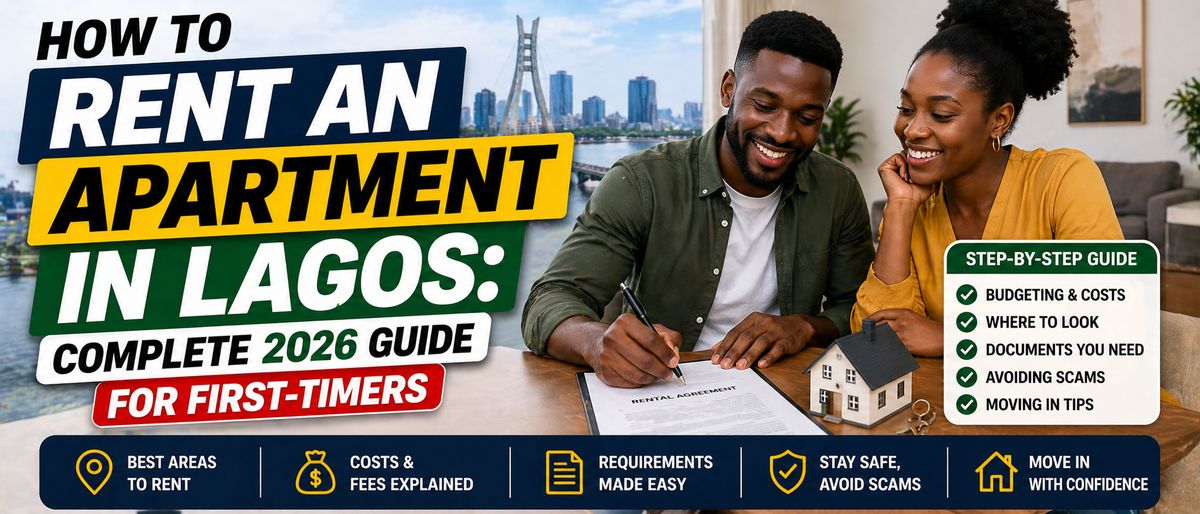
Lagos is Africa's largest city and one of its most complex rental markets. Unlike most cities where you pay monthly, Lagos landlords almost universally demand 1–2 years of rent upfront. Agents charge a separate fee. And scams are rampant. Here is everything you need to know to navigate it safely in 2026.
Step 1: Define Your Budget (Include ALL Costs)
Most first-timers budget for rent and forget everything else. Your true move-in cost in Lagos is typically 2.5x–3x your annual rent in the first year. Here is the full breakdown:
- Annual rent: The headline figure (paid 1–2 years upfront)
- Agency fee: 10% of annual rent, paid to the agent (often negotiable to 5–7%)
- Legal fee / Agreement fee: 5–10% of annual rent, covers tenancy agreement drafting
- Caution deposit: Equivalent to 1–3 months rent, refundable if no damage
- Service charge (estates): ₦150,000 – ₦500,000/year for estate maintenance
- Moving costs: ₦30,000 – ₦150,000 depending on volume and distance
Example: If a flat is advertised at ₦800,000/year, your real first-year outflow could be ₦800,000 (rent) + ₦80,000 (agency) + ₦60,000 (legal) + ₦100,000 (caution) + ₦200,000 (service) = over ₦1.2 million.
Step 2: Choose the Right Area for You
Your area should be chosen based on three factors: where you work, what you can afford, and the lifestyle you want. Here is a quick guide:
- Working on Lagos Island / VI: Consider Lekki Phase 1, Oniru, or Ikoyi if budget allows. Surulere or Yaba if it does not.
- Working on the Mainland: Ikeja, Ojodu-Berger, Agege, Ogba, Ilupeju, and Ketu all offer value
- Remote worker / flexible commute: Lekki (Chevron corridor), Gbagada, or Magodo offer a good quality-of-life balance
- Student / first job: Yaba, Surulere, Bariga, and Ikorodu offer the most affordable options near major campuses and employment hubs
Step 3: Finding Properties (The Safe Way)
There are three main ways to find a rental in Lagos. Each has serious trade-offs:
Option A: Online Platforms (Recommended)
Platforms like GidiStay list NIN-verified landlords with escrow-protected payments. You can browse, book viewings, and pay safely — all in one place. No cash up front, no "inspection fee" scams.
Option B: Letting Agents
Traditional agents (usually found at letting boards along major roads) can show you properties quickly — but they typically charge a full 10% agency fee AND a legal fee. Always verify the agent has physical office premises before giving them any money. Never pay upfront before a verified viewing.
Option C: "To Let" Signs
Walking or driving through your target area and calling "To Let" numbers is effective for finding landlord-direct deals. The risk is that scammers also put up fake boards — always view the property with the actual landlord (not just a "caretaker") before paying anything.
Step 4: Property Viewings — Red Flags to Watch
Never skip the physical viewing. During your visit, check:
- Water supply: Ask to see the borehole and overhead tank. Run the taps. Is there a community water supply?
- Electricity: Does the compound have a generator? Who pays for diesel? Is NEPA (EKEDC/IKEDC) metered or estimated?
- Roof and ceiling: Check for damp patches, especially on upper floors in the rainy season
- Windows, doors, and locks: Test them all
- Neighbors: Speak to at least one existing tenant about their experience
- Flooding: Ask if the area floods in heavy rain — this is critical in many Lagos neighbourhoods
Red flags: An agent who refuses to let you meet the landlord; anyone asking for cash before you view; pressure to decide on the spot; a price significantly below market rate for the area.
Step 5: Negotiate Effectively
Everything in Lagos real estate is negotiable — rent, agency fees, payment structure, and even caution deposits. Tips for negotiating:
- Research comparable listings in the area before negotiating
- Offer to sign a 2-year lease in exchange for a rent freeze or reduction
- Propose quarterly payments — some modern landlords accept this for a small premium
- If you have a strong rental history (e.g. a GidiStay GTID score), use it as leverage — landlords value reliable tenants
Step 6: The Tenancy Agreement
Never move in without a signed, stamped tenancy agreement. The agreement should include:
- Full names and addresses of both landlord and tenant
- Exact monthly/annual rent and payment schedule
- Start and end date of tenancy
- Notice period for either party to exit
- Who is responsible for which repairs
- Conditions for caution deposit refund
Under the Lagos Tenancy Law 2011, a landlord must give you at least 1 month notice if you are on a monthly tenancy, and at least 3 months if you are on an annual tenancy. Know your rights.
Step 7: Moving In Safely
- Take photos and video of every room, fixture, and appliance on your first day — this is your evidence if the landlord claims damages on exit
- Record electricity, water, and gas meter readings on day one
- Confirm which bills you are responsible for (estate dues, LAWMA waste collection fee, etc.)
- Get the estate contact number and emergency plumber/electrician contacts
The GidiStay Way: Renting Without the Stress
GidiStay was built specifically for the Nigerian rental market. Here is how it removes the usual headaches:
- NIN-verified landlords: Every host is identity-verified before listing
- Escrow payments: Your money is held safely until you confirm the property matches the listing on check-in day
- No surprise agency fees: GidiStay charges a transparent platform fee — no middleman charging 10%
- GTID for tenants: Build your rental passport so future landlords can trust you instantly
Browse verified Lagos rentals on GidiStay and take the stress out of your search.